WSOP Shot Clocks Spark Debate During 2026 Main Event

Written by: Jonathan Rodriguez
Published: Mon Jul 13, 2026, 9:00 am ET
Read Time: 4 minutes
poker
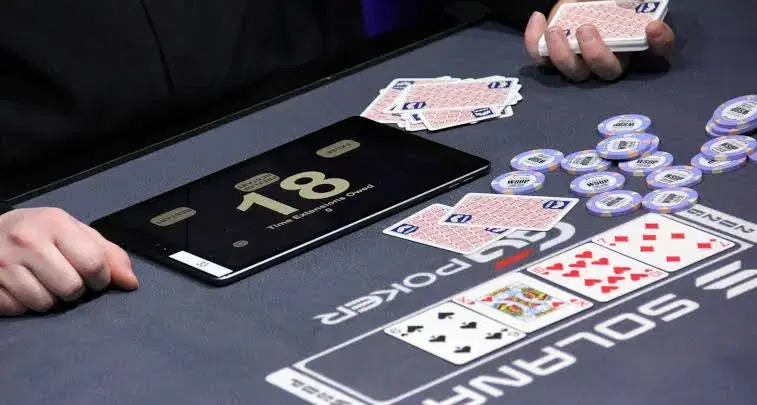
The World Series of Poker (WSOP) introduced shot clocks at the start of Day 7 of the 2026 WSOP Main Event after widespread criticism over excessive stalling.
Tournament officials made the decision following several lengthy tanks during Day 6, including one hand that reportedly lasted more than 15 minutes while players waited for a pay jump.
The move immediately sparked debate throughout the poker community. Many professionals welcomed faster play and stronger enforcement against deliberate stalling.
Others argued that changing the rules after the tournament began created an uneven playing field, especially for recreational players unfamiliar with shot clocks.
The controversy has since become one of the biggest talking points of this year's championship. It also renewed discussions about whether future WSOP Main Events should permanently adopt timed decisions.
As players continue battling for poker's most prestigious title, the decision could shape tournament policies for years.
Meanwhile, millions of enthusiasts grinding on US online poker sites have closely watched the debate unfold. They note how the live tournament arena is shifting toward the automated time banks standard in digital games.
Players and Poker Figures Split Over Mid-Tournament Shot Clock Decision
Reaction across the poker world was sharply divided after the WSOP announced the new timing rules before cards went into the air on Day 7.
Many players agreed that excessive stalling had become a serious issue. However, they questioned whether tournament officials should have introduced a significant procedural change after six days of play.
WSOP commentator and 2004 Main Event runner-up David Williams criticized the decision while suggesting officials already possessed sufficient authority to address slow play.
"This is a bad idea. The floor should just use their discretion in spots where someone is being egregious like Loren and numerous others yesterday."
Williams argued that tournament staff should intervene only when players intentionally abuse the clock instead of applying shot clocks across every table.
High-stakes professional Chris Brewer voiced even stronger criticism. He described the decision as a "completely awful decision" and called it "insanely unfair" to recreational players.
Brewer argued that experienced high roller regulars compete with shot clocks throughout the year. Recreational players, however, rarely face those conditions.
He believed introducing timed decisions deep into the Main Event gave seasoned professionals another advantage at the expense of less experienced competitors.
Supporters Say Shot Clocks Protect Tournament Integrity
Despite the criticism, several respected players defended the WSOP's decision. Supporters argued that the events of Day 6 demonstrated how existing procedures failed to prevent strategic stalling.
During one widely discussed hand, action reportedly stopped for more than 15 minutes as a player delayed making an obvious decision before a pay jump.
Because every remaining competitor benefited financially from the delay, few players wanted to call the clock themselves.
Supporters believe shot clocks remove that conflict of interest by applying the same timing standards to everyone.
They also argue that quicker decisions improve the pace of play, create a better viewing experience, and prevent players from gaining an unfair edge through excessive tanking.
Some players acknowledged that introducing the system mid-tournament was imperfect. Even so, they viewed it as the best available solution after the Day 6 controversy.
Critics Believe the Rule Change Came Too Late
Opponents focused less on the shot clock itself and more on when the WSOP introduced it.
Many players noted they entered the Main Event under one set of tournament conditions. They adjusted their strategy around those expectations throughout six days of play.
Critics argued that changing the rules after the tournament began undermined competitive fairness. They also questioned why officials did not rely more heavily on existing slow-play penalties or dealer discretion.
Several players suggested the WSOP should instead announce shot clocks before next year's Main Event. Doing so would allow every participant to prepare equally for timed decisions.
The debate also highlighted the growing difference between elite professionals and recreational players. While many high rollers regularly compete with action clocks, casual players often encounter them only in select tournaments.
Shot Clocks Could Shape Future WSOP Main Events
The Day 7 decision may influence far more than the remainder of the 2026 WSOP Main Event.
Tournament organizers now have a real-world example of how shot clocks perform during poker's biggest event. Officials will likely evaluate player feedback, pace of play, and overall tournament operations before finalizing future policies.
If the system succeeds, the WSOP could introduce shot clocks earlier in future Main Events or make them a permanent feature during later stages. Alternatively, officials may explore hybrid solutions that combine floor discretion with individual time banks.
Regardless of the outcome, the controversy has intensified the conversation surrounding slow play and tournament integrity. Poker tours worldwide have increasingly embraced action clocks, and the WSOP now appears closer than ever to following that trend.
For players competing live or following the action through US online poker sites, the 2026 Main Event has become about more than crowning a world champion.\
It has also become a defining moment in the ongoing evolution of tournament poker.
Poker Betting News Poker Betting News Poker Betting News Poker Betting NewsMore Poker News

Fall WSOP Online Festival Returns With 33 Bracelets

RGPS Golden Expedition Heads to Ohio for $200K GTD

2026 WSOPC Council Bluffs: Schedule, Buy-ins & Main Event

2026 WPT World Championship Expands to 85+ Events

Jonathan Rodriguez
Jonathan is an avid basketball fan, and is often looking forward to the next upcoming NBA season when not checking players' stats during games. He also likes to keep his ears on the ground for the latest rumblings in the online casino industry.
This site contains commercial content. We may be compensated for the links provided on this page. The content on this page is for informational purposes only. Betting News makes no representation or warranty as to the accuracy of the information given or the outcome of any game or event.