French Open Betting: How to Bet on the Action at Roland Garros in 2026

Written by: Eddie Griffin
Last Update: Tue Jun 09, 2026, 10:32 pm ET
Read Time: 12 minutes
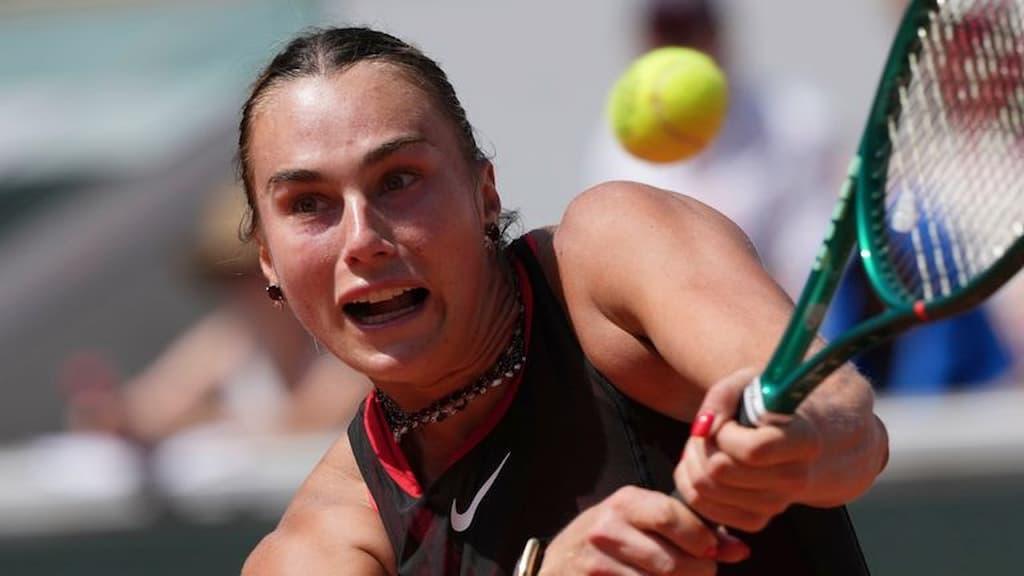
The French Open brings a completely different flavor to the tennis calendar, shifting from fast hard courts to the demanding clay of Paris each spring.
As the second Grand Slam of the year (following the Australian Open and preceding Wimbledon), the French Open challenges the world's best players with longer rallies, slower conditions, and a premium on endurance and tactical discipline. For bettors, that creates a unique set of opportunities compared to the earlier majors.
With unpredictable momentum swings, taxing physical battles, and surface-specific specialists, the French Open offers a deep betting board and a very different handicap compared to other Grand Slams.
This guide covers everything you need to know about betting on the French Open at top online sportsbooks such as Lucky Rebel, BetOnline, and Everygame, from understanding the tournament itself to identifying profitable strategies for wagering on clay.
Where to Bet on the French Open
Several established sportsbooks offer deep French Open markets, and the best options mirror what you would expect for other Grand Slams and major sporting events such as the Super Bowl and March Madness.
Lucky Rebel stands out for its clean interface and strong live betting options. With clay matches often featuring momentum swings, in-play betting can be especially valuable here.
BetOnline provides one of the most robust futures markets, allowing bettors to take positions on outright winners well before the tournament begins. This is particularly useful for identifying clay specialists before their odds shorten.
Everygame offers a simple, reliable platform with competitive odds across singles markets and select props. Its mobile-friendly setup makes it easy to follow matches and place bets throughout the day.
As with other majors, international sportsbooks, Canadian sportsbooks, and crypto sportsbooks also carry extensive French Open markets. Bettors from all around the world can get in on in the action both before and during the tournament.
What to Know About the 2026 French Open
French Open Men's and Women's Singles Seeds
Former French Open singles champions are noted in bold. 2026 champions are bolded and italicized.
Men's Singles
- Jannik Sinner
- Alexander Zverev
- Novak Djokovic
- Felix Auger-Aliassime
- Ben Shelton
- Daniil Medvedev
- Taylor Fritz
- Alex de Minaur
- Alexander Bublik
- Flavio Cobolli
- Andrey Rublev
- Jiri Lehecka
- Karen Khachanov
- Luciano Darderi
- Casper Ruud
- Valentin Vacherot
- Arthur Fils (withdrew)
- Learner Tien
- Frances Tiafoe
- Cameron Norrie
- Alejandro Davidovich Fokina
- Arthur Rinderknech
- Tomas Martin Etcheverry
- Tommy Paul
- Francisco Cerundolo
- Jakub Mensik
- Rafael Jodar
- Joao Fonseca
- Tallon Griekspoor
- Corentin Moutet
- Brandon Nakashima
- Ugo Humbert
Women's Singles
- Aryna Sabalenka
- Elena Rybakina
- Iga Swiatek
- Coco Gauff
- Jessica Pegula
- Amanda Anisimova
- Elina Svitolina
- Mirra Andreeva
- Victoria Mboko
- Karolina Muchova
- Belinda Bencic
- Linda Noskova
- Jasmine Paolini
- Ekaterina Alexandrova
- Marta Kostyuk
- Naomi Osaka
- Iva Jovic
- Sorana Cirstea
- Madison Keys
- Liudmila Samsonova
- Clara Tauson
- Anna Kalinskaya
- Elise Mertens
- Leylah Fernandez
- Diana Shnaider
- Hailey Baptiste
- Marie Bouzkova
- Anastasia Potapova
- Jelena Ostapenko
- Ann Li
- Cristina Bucsa
- Wang Xinyu
Schedule for the 2026 French Open
| Date | Day | Round |
| May 24 | Sunday | Men's & Women's 1st Round |
| May 25 | Monday | Men's & Women's 1st Round |
| May 26 | Tuesday | Men's & Women's 1st Round |
| May 27 | Wednesday | Men's & Women's 2nd Round |
| May 28 | Thursday | Men's & Women's 2nd Round |
| May 29 | Friday | Men's & Women's 3rd Round |
| May 30 | Saturday | Men's & Women's 3rd Round |
| May 31 | Sunday | Men's & Women's 4th Round (Round of 16) |
| June 1 | Monday | Men's & Women's 4th Round (Round of 16) |
| June 2 | Tuesday | Men's & Women's Quarterfinals |
| June 3 | Wednesday | Men's & Women's Quarterfinals |
| June 4 | Thursday | Women's Semifinals |
| June 5 | Friday | Men's Semifinals |
| June 6 | Saturday | Women's Singles Final (3 p.m. local/9 a.m. U.S. ET) |
| June 7 | Sunday | Men's Singles Final (3 p.m. local/9 a.m. U.S. ET) |
2026 French Open Broadcast Information
The Warner Bros. Discovery family of networks will handle primary coverage of the 2026 French Open, with a mix of TV and streaming options available throughout the tournament.
TNT and truTV will carry daily coverage from the early rounds through the quarterfinals, with TNT also broadcast the men's and women's singles semifinals and finals. For bettors and fans who want access to every match on the schedule, Max (with the B/R Sports add-on) will stream matches from every court at Roland Garros.
Tennis Channel will also provide supplemental coverage, including highlights, replays, and select early-round matches.
From a betting perspective, the timing works well for North American bettors. Paris is six hours ahead of Eastern Time, which means matches typically start around 5:00 a.m. ET and run into the afternoon. That gives bettors a full slate of matches to track during the day, making it one of the more accessible Grand Slams for live betting in the U.S.

French Open Betting Markets
Futures and Outright Winner
Outright betting is especially interesting at the French Open because clay specialists often outperform their rankings. Identifying these players early can provide strong value.
Match Winner (Moneyline)
Picking the winner of a match remains the most straightforward option. However, clay increases variance, as longer rallies and physical wear can shift outcomes over time.
Set Betting
With extended matches and frequent momentum swings, predicting exact set scores can offer strong payouts—but requires a solid read on player endurance and matchup dynamics.
Game Totals (Over/Under)
Clay-court matches often feature more games due to breaks of serve and longer sets. Overs can hold value, especially in evenly matched contests.
First Set Winner
This market can be useful for identifying fast starters or players who historically take time to adjust to clay conditions.
Prop Bets
Props such as total breaks of serve, double faults, or tiebreak occurrence are more nuanced on clay, where breaks are more common and tiebreaks less frequent.
Live Betting
Live betting is arguably at its best during the French Open. Momentum swings, fatigue, and tactical adjustments create opportunities throughout matches.
French Open Betting Strategy
Betting on clay is not the same as betting on hard courts or grass. If you approach it the same way, you'll get burned. The surface changes everything.
Surface and Playing Style Matter
Clay slows the game down and neutralizes big serves to an extent. Players who rely purely on power lose some of their edge, while those with strong movement, heavy topspin, and patience gain an advantage.
Prioritize players who:
- Excel in long rallies
- Defend well and force errors
- Have proven results on clay
This is why specialists consistently outperform expectations in Paris.
Expect More Breaks of Serve
Unlike faster surfaces, holding serve is less reliable on clay. That opens up value in:
- Break-of-serve betting markets
- Game totals (especially overs)
- Live betting after early breaks
If you're betting like it's a serve-dominated surface, you're missing the point.
Endurance Is a Major Factor
Five-set matches on clay are physically brutal. Matches can swing dramatically after two or three hours, especially if one player shows signs of fatigue.
This creates opportunities to:
- Bet comebacks in live markets
- Fade players with questionable fitness
- Target overs in long, competitive matches
Use Clay-Court Form, Not Just Rankings
A top-10 player on hard courts is not automatically a top-10 threat on clay. Results from Monte Carlo (ATP Masters 1000), Madrid (ATP Masters 1000 and WTA 1000), and Rome (ATP Masters 1000 and WTA 1000) matter more than overall ranking.
Look for:
- Recent wins on clay
- Strong head-to-head matchups on slower surfaces
- Players improving throughout the clay swing
Value Results Over Reputation
Big names often attract public money, which can inflate odds. The French Open is one of the best tournaments to fade reputation and back form.
Underdogs with strong clay resumes frequently outperform expectations.
Bankroll Discipline Still Applies
Clay matches can be unpredictable. Stick to a consistent staking plan—typically 1–3% per bet—and avoid chasing losses.
If you're serious about betting long-term, discipline matters more than picking a single winner.
Notable French Open Information and History
What Is the French Open?
The French Open is one of tennis's four Grand Slam tournaments, alongside the Australian Open, Wimbledon, and US Open. First held in 1891, it is the premier clay-court event in the sport and the only Grand Slam played on this surface.
Matches take place on red clay courts, which significantly slow the ball and produce higher bounces than hard or grass courts. These conditions favor baseline players with patience, strong defensive skills, and the ability to construct points rather than end them quickly.
The tournament's main courts include Court Philippe-Chatrier (capacity ~15,000), Court Suzanne-Lenglen (~10,000), and Court Simonne-Mathieu (~5,000), all set within a compact venue that creates an intimate, high-pressure atmosphere.
Unlike faster surfaces, clay rewards consistency and physical endurance. Matches often feature long rallies and can extend into marathons. Players must win seven matches over two weeks to lift the Coupe des Mousquetaires (men) or Coupe Suzanne-Lenglen (women), earning 2,000 ranking points in the process.
French Open Icons
Rafael Nadal's Clay-Court Dominance
There's no way to talk about the French Open without starting with Rafael Nadal. Nadal's 14 titles at Roland Garros (2005–2008, 2010–2014, 2017–2020, 2022) represent one of the most dominant runs in sports history. He lost just four matches across nearly two decades, posting the highest win rate at any Grand Slam.
Chris Evert's Clay Legacy
Before Nadal, Evert set a sensational standard on clay. She won seven French Open titles between 1974 and 1986 and put together a 125-match winning streak on the surface. Her consistency and control made her the defining clay-court player of her era.
The "Big Three" in Paris
While the Roger Federer–Rafael Nadal–Novak Djokovic rivalry shaped tennis across all surfaces, the French Open tilted heavily in Nadal's favor. Djokovic (three titles) and Federer (one) both completed Career Grand Slams—but often had to go through Nadal, who beat Federer in four finals and Djokovic in three.
Clay Changes Everything
The red clay in Paris creates the most physically demanding conditions in tennis. Points last longer, movement is more technical, and patience is critical. It consistently favors grinders, defenders, and players who can construct points over those relying on pure power or big serving.
The Wait for a Home Champion
French fans are still waiting. Yannick Noah (1983) remains the last French man to win the title, while Mary Pierce (2000) is the most recent Frenchwoman to lift the trophy on home soil.
Iconic French Open Matches and Moments
Suzanne Lenglen's Era
Suzanne Lenglen dominated the 1920s, winning six titles in seven years. Her aggressive style and influence on the sport helped shape modern tennis. Both a main court and the women's trophy now carry her name.
1984 Men's Final – Ivan Lendl vs. John McEnroe
McEnroe led by two sets during one of the greatest seasons in tennis history, but Lendl stormed back to win in five. It marked Lendl's first Grand Slam title and a defining moment in both careers.
1989 Fourth Round – Michael Chang vs. Ivan Lendl
At 17 years old, Chang overcame severe cramps to upset the world No. 1. His underhand serve and fearless tactics turned the match into one of the most memorable displays of grit in tennis history. Chang would go on to win the men's singles title that year, becoming the youngest American male Grand Slam title winner and the first American man to win the French Open since 1955.
1992 Women's Final – Monica Seles vs. Steffi Graf
A three-set war that ended 10–8 in the final set. Seles' relentless power against Graf's precision produced one of the highest-quality clay-court matches ever played.
1999 Women's Final – Steffi Graf vs. Martina Hingis
One of the most dramatic finals ever. Graf, at age 30, came back to beat Hingis in a match filled with controversy, momentum swings, and a tense, emotional finish.
Gustavo Kuerten's Celebration (2001)
After winning his third title in 2001, Kuerten drew a heart in the clay of Court Philippe-Chatrier and lay inside it—a simple but unforgettable moment that captured his connection with the Paris crowd.
2009 Fourth Round – Robin Soderling vs. Rafael Nadal
Arguably the biggest upset in tournament history. Söderling handed Nadal his first-ever loss at Roland Garros, snapping a 31-match win streak and clearing the path for Federer's long-awaited title.
2025 Men's Final – Carlos Alcaraz vs. Jannik Sinner
A defining match for the next generation. Alcaraz defended his title in a 5-hour, 29-minute battle, rallying from two sets down and saving three match points. The match ended in the tournament's first fifth-set championship tiebreak.
French Open Men's and Women's Singles Winners (2000-Present)
| Year | Men's Singles Champion | Women's Singles Champion |
| 2025 | Alexander Zverev | Mirra Andreeva |
| 2025 | Carlos Alcaraz | Coco Gauff |
| 2024 | Carlos Alcaraz | Iga Swiatek |
| 2023 | Novak Djokovic | Iga Swiatek |
| 2022 | Rafael Nadal | Iga Swiatek |
| 2021 | Novak Djokovic | Barbora Krejcikova |
| 2020 | Rafael Nadal | Iga Swiatek |
| 2019 | Rafael Nadal | Ashleigh Barty |
| 2018 | Rafael Nadal | Simona Halep |
| 2017 | Rafael Nadal | Jelena Ostapenko |
| 2016 | Novak Djokovic | Garbine Muguruza |
| 2015 | Stan Wawrinka | Serena Williams |
| 2014 | Rafael Nadal | Maria Sharapova |
| 2013 | Rafael Nadal | Serena Williams |
| 2012 | Rafael Nadal | Maria Sharapova |
| 2011 | Rafael Nadal | Li Na |
| 2010 | Rafael Nadal | Francesca Schiavone |
| 2009 | Roger Federer | Svetlana Kuznetsova |
| 2008 | Rafael Nadal | Ana Ivanovic |
| 2007 | Rafael Nadal | Justine Henin |
| 2006 | Rafael Nadal | Justine Henin |
| 2005 | Rafael Nadal | Justine Henin |
| 2004 | Gaston Gaudio | Anastasia Myskina |
| 2003 | Juan Carlos Ferrero | Justine Henin |
| 2002 | Albert Costa | Serena Williams |
| 2001 | Gustavo Kuerten | Jennifer Capriati |
| 2000 | Gustavo Kuerten | Mary Pierce |
Conclusion
The French Open presents a completely different betting landscape compared to other Grand Slams. The clay surface slows the game, extends rallies, and rewards patience, creating opportunities for bettors who understand how those factors influence match outcomes.
If you want to do this right, focus on clay-court form, not reputation. Look for value in underdogs, lean into live betting when momentum shifts, and understand that endurance plays a bigger role here than at any other major.
There's no shortcut. The bettors who win at Roland Garros are the ones who adapt to the surface instead of fighting it.
Treat betting as informed entertainment, stay disciplined with your bankroll, and use the unique dynamics of clay to your advantage.