AGA Says Prediction Markets Cost States $1B in Revenue

Written by: Jonathan Rodriguez
Published: Mon Jun 01, 2026, 8:00 am ET
Read Time: 5 minutes
industry
The American Gaming Association (AGA) claims that prediction markets have already cost US states and tribal governments more than $1 billion in lost tax revenue since the start of 2025. The trade group argues that sports-related prediction contracts have expanded rapidly. However, such platforms avoid the state-level oversight and taxation requirements imposed on licensed sportsbooks.
As prediction market operators continue offering event contracts tied to sporting outcomes, the dispute has become one of the most significant regulatory issues facing the USA gambling industry.
The debate now extends beyond competition between operators and focuses on whether states and tribes are losing substantial public revenue that would otherwise support community programs, infrastructure, and essential services.
According to the AGA, policymakers and regulators must address the current regulatory gap if they hope to prevent further revenue losses and preserve the integrity of state-regulated sports wagering markets.
The CFTC's Role in Prediction Market Regulation Draws Scrutiny
The controversy centers on the role of the Commodity Futures Trading Commission (CFTC), which oversees federally regulated prediction markets. Companies such as Kalshi maintain that their event contracts are legal financial products. Moreover, these products are regulated under federal commodities law rather than state gambling statutes.
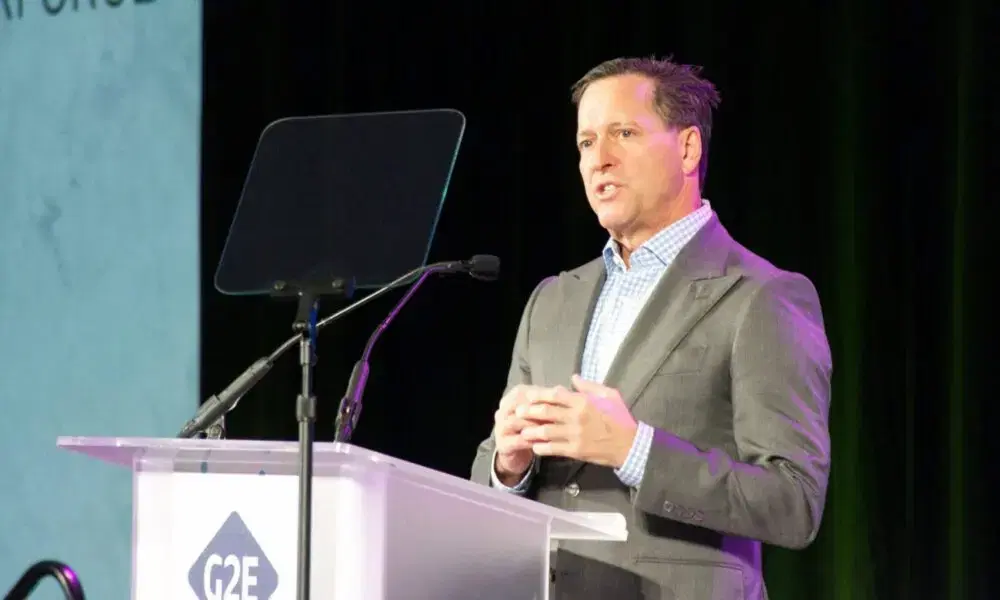
However, AGA President and CEO Bill Miller has questioned whether the agency is equipped to regulate products that closely resemble sports wagering. Miller argues that prediction markets now offer products that compete directly with US online sportsbooks while operating outside state gaming frameworks.
Speaking on CNBC's Squawk Box, Miller pointed to growing concerns among state officials
regarding federal oversight.
"Recently, 41 attorneys general from around the country weighed in saying the CFTC plays an important role in the national economy, but it is not the regulator of national sportsbooks," Miller noted.
The AGA believes state regulators should retain authority over sports wagering products because they understand local gaming markets and consumer protection requirements. The organization has repeatedly called for greater coordination between federal regulators and state gaming agencies.
AGA Says Prediction Markets Are Diverting Revenue From States and Tribes
The AGA argues that prediction markets effectively offer illegal sports betting products without complying with state licensing, taxation, and responsible gaming requirements.
As a result, the organization says billions of dollars in wagering activity are bypassing regulated channels. Those wagers would otherwise flow through licensed sportsbooks that contribute tax revenue and tribal gaming payments.
"It's about states and tribes that are losing literally $1 billion in state and tribal revenue that would otherwise go to fund important community projects and pay taxes to these states," Miller said.
Miller has also described prediction markets as "backdoor sports betting," arguing that the products mirror traditional sports wagers despite operating under a different regulatory structure.
For tribal governments, the issue carries particular significance. Many tribes rely on gaming revenue to support healthcare, housing, education, and economic development projects. Consequently, the AGA contends that continued growth in prediction markets could weaken those funding sources.
Prediction Market Operators Reject Sports Betting Label
Prediction market firms strongly dispute the AGA's characterization of their products. Operators argue that event contracts serve an economic purpose beyond entertainment and gambling.
Industry advocates maintain that prediction markets provide valuable forecasting tools that help participants assess future outcomes and aggregate information efficiently. They also contend that sports-event contracts fall within the CFTC's jurisdiction and comply with federal law.
However, the disagreement has evolved far beyond a typical regulatory debate. In recent months, executives and supporters of prediction market platforms have openly attacked the AGA's conclusions. Prediction market backers also questioned the organization's motives.
Following the AGA's $1 billion claim, prediction market advocates dismissed the estimate as "fake math from casinos." Industry figures also mocked the report on social media, accusing the AGA of protecting incumbent sportsbooks from emerging competition.
From the prediction market industry's perspective, the AGA's calculations assume that every dollar traded through prediction markets would otherwise have been wagered through licensed sportsbooks. Critics argue that such assumptions exaggerate the actual tax impact and ignore the unique characteristics of prediction market participants.
The debate gained additional attention after President Donald Trump recently expressed support for prediction markets and their broader role in financial forecasting. His comments boosted industry arguments that prediction markets provide real economic utility rather than just wagering products.
Meanwhile, state gaming regulators remain unconvinced. Several states have pursued enforcement actions against prediction market operators, while ongoing litigation continues across multiple jurisdictions.
As a result, the dispute has become increasingly public, political, and personal. Both sides competing to shape public opinion while courts determine the legal boundaries of sports-event contracts.
Where the Regulatory Battle Could Go Next
The dispute between state regulators and prediction market platforms is unlikely to disappear soon. Instead, the issue appears headed toward a combination of court challenges, regulatory reviews, and potential federal action.
Recent court rulings have produced mixed results for both sides. Kalshi has secured preliminary victories in several jurisdictions by arguing that federal commodities law preempts state gaming regulations. Simultaneously, state regulators are pursuing lawsuits and enforcement actions to block sports-event contracts within their borders.
The outcome could ultimately determine how sports-related event contracts are regulated nationwide. If courts side with prediction market operators, states may face continued challenges collecting revenue from activity that resembles sports betting. Conversely, if regulators succeed, operators may need to comply with state gaming laws or limit certain offerings.
Federal lawmakers and regulators may also face increasing pressure to clarify where prediction markets end and sports betting begins. Without clearer guidance, legal uncertainty is likely to persist as more states challenge prediction market offerings.
For now, the AGA continues urging policymakers to close what it views as a regulatory loophole. The AGA argues tighter oversight protects consumers, supports tribal communities, and prevents further state tax revenue losses to sportsbooks.
Whether that oversight comes through Congress, the courts, the CFTC, or state regulators remains unclear. What is certain is that the conflict between the traditional gaming industry and prediction market operators has become one of the most closely watched battles in US gambling.
The stakes now extend well beyond competition, touching state authority, tribal sovereignty, federal regulation, and billions of dollars in potential tax revenue.
Betting Industry News Betting Industry News Betting Industry News Betting Industry NewsMore Industry News
Protect College Sports Act Advances in Senate

Ninth Circuit Reverses Kalshi Tribal Injunction Ruling

New York Sports Betting Handle Falls 15% in August
H.R.10357 Advances Gambling Loss Tax Deduction Fix

Jonathan Rodriguez
Jonathan is an avid basketball fan, and is often looking forward to the next upcoming NBA season when not checking players' stats during games. He also likes to keep his ears on the ground for the latest rumblings in the online casino industry.
This site contains commercial content. We may be compensated for the links provided on this page. The content on this page is for informational purposes only. Betting News makes no representation or warranty as to the accuracy of the information given or the outcome of any game or event.