CFTC Sues Rhode Island Over Sports Contracts Clash

Written by: Jonathan Rodriguez
Published: Mon Jun 01, 2026, 11:00 am ET
Read Time: 4 minutes
industry
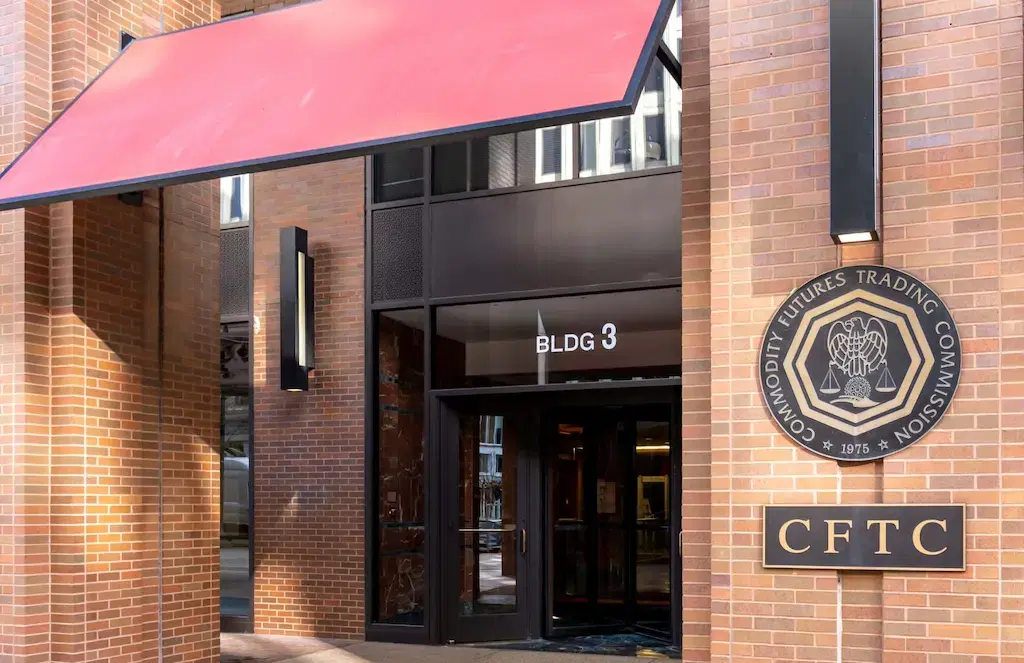
The U.S. Commodity Futures Trading Commission (CFTC) has filed a federal lawsuit against Rhode Island, escalating a national dispute over prediction markets and sports event contracts.
The complaint also names Rhode Island Attorney General Peter F. Neronha and RI Lottery Director Mark Curcolo. At the center of the case is whether states can regulate prediction markets as gambling or whether federal derivatives law takes precedence.
The CFTC argues that Rhode Island overstepped its authority by attempting to enforce state gambling laws on federally regulated financial products. The dispute involves prediction market platforms such as Kalshi and Polymarket, which offer contracts tied to real-world outcomes, including sports events.
Rhode Island's enforcement actions intensified after state officials moved to apply gambling statutes to these platforms. The CFTC then intervened following legal escalation from both state enforcement and industry litigation, including Kalshi's earlier federal filing seeking protection from state-level restrictions.
Main Provisions of the CFTC Lawsuit
The CFTC lawsuit seeks to prevent Rhode Island from treating sports event contracts as illegal gambling under state law. It also asks the court to block state officials from interfering with federally regulated event contracts offered on approved exchanges.
A key trigger was Rhode Island Attorney General Peter F. Neronha's lawsuit against Kalshi and Polymarket. The state argued that both companies were operating unauthorized sports wagering platforms through sports event contracts that mirror betting markets.
Kalshi's preemptive federal lawsuit played a central role in shaping the CFTC's response. As a CFTC-registered exchange, Kalshi falls directly under federal derivatives oversight.
Polymarket, by contrast, operates outside CFTC regulation, though Rhode Island included both companies in its enforcement action. This distinction highlights the tension between regulated exchanges and offshore or unregistered prediction platforms.
CFTC's Position and Legal Argument
The CFTC maintains that it holds exclusive jurisdiction over prediction markets structured as derivatives. It argues that state-level gambling enforcement cannot override federal commodities law or reclassify approved event contracts.
"CFTC-registered exchanges have faced an onslaught of lawsuits seeking to limit Americans' access to event contracts and undermine the CFTC's sole regulatory jurisdiction over prediction markets," said CFTC Chairman Michael Selig in a press release. "This power grab ignores the law and decades of precedent."
The agency warns that allowing states to intervene would fracture national market regulation. It also argues that inconsistent rules would create legal uncertainty for federally registered exchanges, particularly those offering sports-related contracts.
Rhode Island's Position on Prediction Markets
Rhode Island officials argue that sports event contracts function as unlicensed sports betting products. They claim these offerings fall squarely under Rhode Island gambling laws and should be regulated like other forms of wagering.
Attorney General Peter F. Neronha has pushed back against federal intervention. He argues that it does not change the underlying legal violations under state law.
AG Neronha has also said that companies should not allow citizens to "foot the bill" for what Rhode Island considers unauthorized gambling activity. State regulators maintain that prediction markets closely resemble the structure and risk profile of US online sportsbooks, but without equivalent licensing or consumer safeguards.
Bigger Context of the CFTC-Rhode Island Lawsuit
The Rhode Island case is part of a broader wave of disputes across the United States involving prediction markets. States including Minnesota, Nevada, Illinois, Arizona, and New York have also taken legal or regulatory steps to challenge similar platforms.
At the same time, federal courts are increasingly becoming the main venue for resolving jurisdictional conflicts. The CFTC continues to assert that prediction markets tied to federally regulated exchanges must remain under uniform national oversight.
Potential Direction of Regulatory Conflict
The outcome of this case could shape how prediction markets operate across the United States. Federal regulators are pushing for centralized control under commodities law, while states seek to preserve authority over gambling-related activity within their borders.
As litigation expands, lawmakers and regulators remain divided on how to classify sports event contracts. The courts will ultimately determine whether prediction markets are financial instruments under federal law or gambling products subject to state regulation.
Betting Industry News Betting Industry News Betting Industry News Betting Industry NewsMore Industry News
South Carolina Governor Race Could Open Door to Sports Betting

Nevada Targets 2027 Sportsbook Tech Standards Overhaul
NFL Backs SCOTUS Review of Prediction Markets

Coinbase Halts Sports Contracts in Michigan

Jonathan Rodriguez
Jonathan is an avid basketball fan, and is often looking forward to the next upcoming NBA season when not checking players' stats during games. He also likes to keep his ears on the ground for the latest rumblings in the online casino industry.
This site contains commercial content. We may be compensated for the links provided on this page. The content on this page is for informational purposes only. Betting News makes no representation or warranty as to the accuracy of the information given or the outcome of any game or event.