Chris Christie Urges Crackdown on Prediction Markets

Written by: Jonathan Rodriguez
Published: Fri Sep 25, 2026, 7:00 am ET
Read Time: 4 minutes
industry
Former New Jersey Gov. Chris Christie is calling on state regulators to take stronger action against prediction markets offering sports-related contracts.
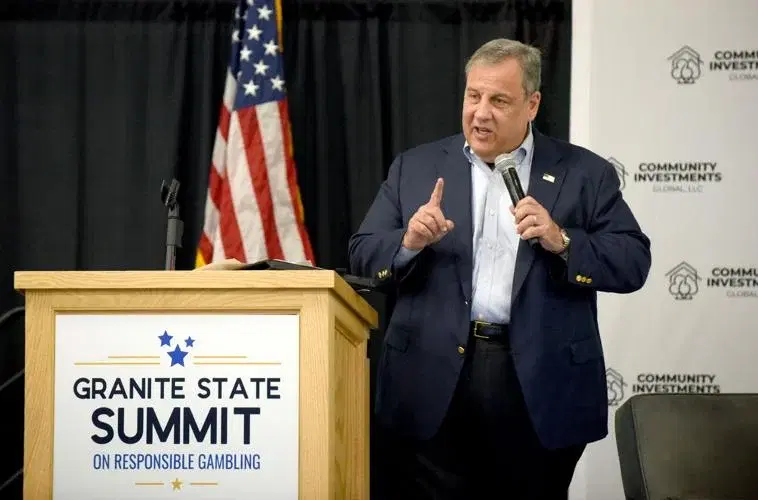
Christie made the remarks at the Granite State Summit on Responsible Gaming in New Hampshire. He urged state attorneys general to challenge prediction-market operators that offer sports contracts without state authorization.
His comments come as states and prediction-market companies continue fighting over regulatory jurisdiction. Platforms such as Kalshi argue their event contracts fall under federal commodities regulation.
State regulators, however, have increasingly argued that sports contracts constitute wagering under state law.
Christie Urges States to Take Action
Christie specifically encouraged New Hampshire officials to pursue prediction-market operators through state enforcement measures. He called for cease-and-desist orders when platforms offer sports contracts without state authorization.
"Stop them from operating in your state," he said. "Send them a cease-and-desist letter, and if they don't cease and desist, then sue them in New Hampshire. Go right at them, because they're sticking it to your state from a public health perspective, from a revenue perspective."
Christie also questioned why prediction markets should face different requirements from licensed gambling operators. Traditional sportsbooks must follow state rules covering licensing, taxation, age restrictions and responsible gambling.
The former governor also serves as a strategic adviser to the American Gaming Association (AGA). The trade group represents commercial and tribal gaming interests, including operators competing in state-regulated sports betting markets.
Christie joined the AGA as prediction markets became a growing issue for the regulated gaming industry.
States Continue Challenging Prediction Markets
Christie's call follows a series of state actions against sports prediction markets. Connecticut, for example, sued Kalshi in August over its sports contracts. The state is seeking an injunction to prevent the company from offering what officials describe as unlicensed sports wagering.
Connecticut also issued nine cease-and-desist orders in September. The orders targeted prediction-market platforms offering sports contracts to state residents. The state's Department of Consumer Protection also issued nearly 30 subpoenas during its investigation.
These actions build on Connecticut's earlier enforcement efforts. In December 2025, the state ordered Kalshi, Robinhood and Crypto.com to cease offering unlicensed sports wagering.
The Connecticut dispute also illustrates the federal-state conflict at the heart of the issue. Kalshi maintains that federal law gives the Commodity Futures Trading Commission exclusive authority over its contracts. Connecticut argues that sports contracts remain subject to state gambling and consumer protection laws.
New Jersey is pursuing its own legal challenge involving Kalshi. The state's case could eventually bring the federal-versus-state regulatory question before the U.S. Supreme Court.
Christie Draws on New Jersey Gambling History
Christie's position carries particular weight because of his role in the development of New Jersey gambling. His administration challenged the federal sports betting prohibition, leading to the Supreme Court's 2018 decision in Murphy v. NCAA.
That ruling allowed states to establish their own sports betting frameworks. New Jersey subsequently developed one of the country's major mobile sports wagering markets.
Christie has since acknowledged that sports betting evolved beyond what policymakers initially envisioned. Mobile wagering transformed sports betting from a largely casino-based activity into an always-accessible product.
"Our regulation, in my view, should be evolving, based upon what we hear from the public and what we observe," he said.
Prediction Markets Raise New Questions
The dispute now places traditional US online sportsbooks alongside federally regulated prediction markets in a rapidly changing competitive environment.
The AGA has increasingly highlighted prediction markets as a concern for state-regulated gaming. In May, 81% of surveyed gaming executives identified prediction markets as a very significant threat to the industry.
Meanwhile, the issue has become part of the wider New Hampshire gambling debate. Christie used his appearance in the state to argue that regulators should enforce existing laws rather than wait for the courts to settle every question.
However, the legal boundaries remain contested. Prediction-market operators continue to assert federal regulatory authority, while states pursue enforcement under their own gambling laws.
Christie's latest remarks therefore add to a national dispute involving regulators, courts, gambling operators and federal officials. The outcome could help determine how sports event contracts are regulated across the United States.
Betting Industry News Betting Industry News Betting Industry News Betting Industry NewsMore Industry News

NY Sues Polymarket Over Gambling; Platform Countersues
IGC Rejects NCAA Push to Ban College Player Props
Virginia iGaming Push Could Return in 2027
NCPG Defends Kalshi Partnership Amid Industry Pushback

Jonathan Rodriguez
Jonathan is an avid basketball fan, and is often looking forward to the next upcoming NBA season when not checking players' stats during games. He also likes to keep his ears on the ground for the latest rumblings in the online casino industry.
This site contains commercial content. We may be compensated for the links provided on this page. The content on this page is for informational purposes only. Betting News makes no representation or warranty as to the accuracy of the information given or the outcome of any game or event.