Michigan Court Orders Kalshi to Block Sports Contracts

Written by: Jonathan Rodriguez
Published: Thu Sep 03, 2026, 7:00 am ET
Read Time: 5 minutes
industry
Michigan has secured another court victory in its growing legal battle with prediction-market operator Kalshi.
An Ingham County Circuit Court judge issued a preliminary injunction requiring Kalshi to block Michigan users from accessing certain sports contracts. The order continues restrictions first imposed through a temporary restraining order in June.
The latest ruling raises the financial stakes for Kalshi. Violations could result in a $500,000 daily fine, while Michigan is pursuing disgorgement of profits generated through Kalshi's operations in the state.
Michigan Court Extends Restrictions on Kalshi
Judge Rosemarie E. Aquilina issued the preliminary injunction after sharply criticizing Kalshi's sports prediction markets.
Aquilina characterized Kalshi as a sportsbook "masquerading as an investment opportunity." She also highlighted potential harm prediction markets could cause Michigan residents.
In particular, the judge cited "profound" potential mental health harm to Michigan youth when explaining the need for continued restrictions.
The ruling follows Michigan Attorney General Dana Nessel's lawsuit against Kalshi. Nessel filed the case in March, arguing that the company violated the state's Lawful Sports Betting Act.
Michigan contends that Kalshi allows residents to wager on sports outcomes without obtaining state approval. The state therefore views these contracts as unlicensed gambling rather than ordinary financial products.
Nessel welcomed the latest court order and criticized Kalshi's approach to sports contracts.
"Kalshi long attempted to pass itself off as a legitimate gaming operation in our state, and I am relieved that this order further protects Michigan residents from its predatory, unlicensed practices," Nessel said in a statement.
"My office will continue to defend Michiganders and enforce our gaming laws, which ensure gambling revenue is regulated and distributed back into our communities."
Injunction Covers Multiple Sports Betting Markets
The preliminary injunction targets more than a general category of sports contracts.
Instead, it covers Kalshi contracts that functionally resemble traditional sports betting products. The affected markets include moneylines, parlays, over/unders, prop bets, and in-game bets.
That distinction could prove important as the case develops. Michigan's argument focuses on how these contracts function rather than how Kalshi classifies them.
Traditional US online sportsbooks commonly offer the same types of markets. Michigan therefore argues that Kalshi's products can operate as sports wagering despite being structured as event contracts.
For Michigan residents, the order means Kalshi cannot provide access to these sports-related markets while the injunction remains active.
Licensed operators, meanwhile, continue operating under Michigan's regulated sports betting framework.
Kalshi Faces a $500,000 Daily Penalty
The preliminary injunction strengthens restrictions created by Michigan's earlier temporary restraining order.
That June order stopped Kalshi from offering or advertising its sports contracts in the state. The latest decision extends those restrictions while the underlying lawsuit continues.
More importantly, the potential penalty has increased substantially. Kalshi now faces a $500,000 daily fine for violating the injunction.
The order also requires Kalshi to maintain geofencing that prevents Michigan users from accessing prohibited sports contracts. The company must use a third-party geolocation provider licensed by the Michigan Gaming Control Board.
These requirements create another operational challenge for Kalshi. The company must ensure its systems consistently identify users located within Michigan.
Michigan Seeks Kalshi's Profits
Michigan's legal challenge extends beyond stopping Kalshi's sports contracts. The state is also pursuing the disgorgement of profits that Kalshi generated while operating in Michigan.
Disgorgement would seek to recover money the state argues Kalshi earned through activities that violated Michigan's gambling laws.
That financial claim adds another layer to the dispute. Even if Kalshi changes its Michigan operations, the state could continue pursuing financial remedies tied to its earlier activity.
The preliminary injunction does not determine the final outcome of that claim. Instead, it keeps the restrictions in place while the broader lawsuit proceeds.
Federal Regulation Remains at the Center
Kalshi continues to argue that federal law protects its prediction-market operations.
The Commodity Futures Trading Commission (CFTC) designates Kalshi as a Designated Contract Market (DCM). That designation strengthens Kalshi's argument that its event contracts operate within a federally regulated derivatives framework.
Kalshi therefore maintains that its sports contracts fall under federal rather than state regulation. The company has relied on this position in legal disputes with regulators across the country.
Michigan rejects that argument regarding sports contracts. The state argues that Kalshi's markets effectively allow customers to bet on sporting outcomes without a Michigan license.
The legal dispute has also moved between state and federal courts. Kalshi previously attempted to transfer Michigan's lawsuit to federal court.
The case ultimately returned to state court, allowing Aquilina to issue the latest injunction.
Michigan Adds to Kalshi's National Legal Problems
The Michigan ruling arrives as Kalshi faces mounting challenges across the country.
Several states have taken enforcement action or filed lawsuits involving Kalshi's sports prediction markets. Those cases center on the same fundamental question: whether federal commodities law prevents states from regulating sports event contracts.
The growing disputes create uncertainty for prediction-market operators and customers. Each state can take a different approach while courts determine the boundaries of federal authority.
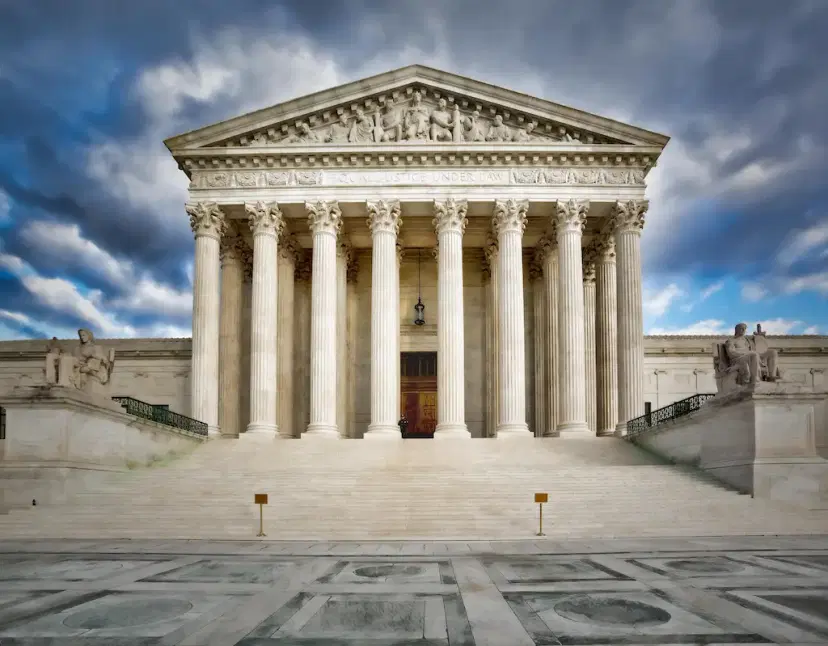
The issue could eventually require a nationwide resolution. New Jersey has already asked the U.S. Supreme Court to determine the extent of state authority over sports prediction markets.
What Happens Next for Kalshi?
The Michigan injunction does not resolve the underlying legal dispute. Instead, it keeps the restrictions active while the case moves toward a final ruling.
For now, Kalshi must block Michigan users from accessing sports contracts covered by the order. The company must also comply with the court's geofencing requirements.
Michigan, meanwhile, will continue pursuing its broader legal claims, including potential disgorgement of Kalshi's Michigan profits.
The case could have significant implications for Michigan gambling and the wider prediction-market industry. A ruling against Kalshi could strengthen state efforts to regulate prediction markets as gambling products.
Conversely, a successful Kalshi challenge could reinforce federal authority over event contracts.
For now, Michigan has made its position clear. The state views Kalshi's sports markets as gambling products subject to its laws.
Kalshi continues to rely on its federal regulatory status. That conflict will remain central to the future of prediction markets and sports wagering across the United States.
Betting Industry News Betting Industry News Betting Industry News Betting Industry NewsMore Industry News
NJ Asks Supreme Court to Rule on Kalshi Prediction Markets

Saskatchewan Extends SIGA Online Gaming Rights to 2029

Nevada Online Sportsbooks Post Strong July Results
Massachusetts Launches Bet on Respect Initiative

Jonathan Rodriguez
Jonathan is an avid basketball fan, and is often looking forward to the next upcoming NBA season when not checking players' stats during games. He also likes to keep his ears on the ground for the latest rumblings in the online casino industry.
This site contains commercial content. We may be compensated for the links provided on this page. The content on this page is for informational purposes only. Betting News makes no representation or warranty as to the accuracy of the information given or the outcome of any game or event.