Underdog Sues Tennessee Over Prediction Market Crackdown

Written by: Jonathan Rodriguez
Published: Tue Oct 20, 2026, 10:00 am ET
Read Time: 4 minutes
industry
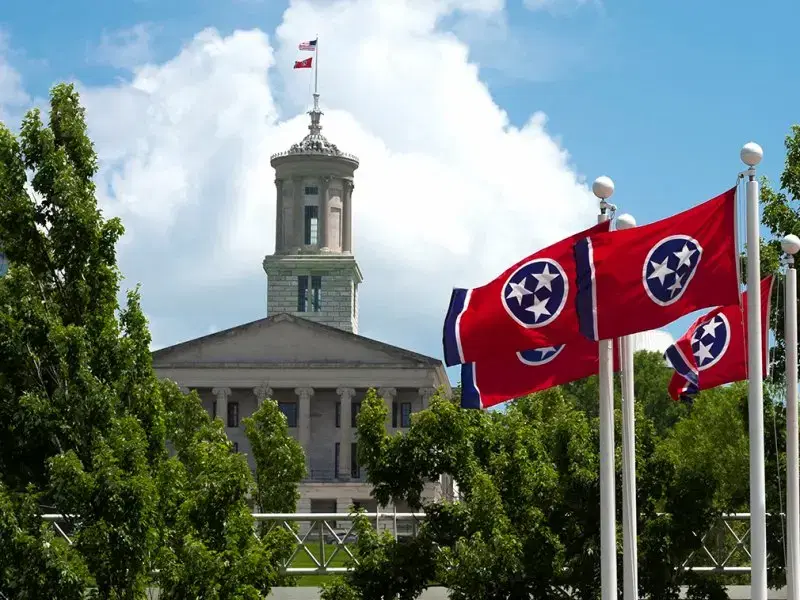
Underdog has sued Tennessee officials to block state gambling laws from being enforced against its sports prediction market.
The lawsuit follows a cease-and-desist letter that threatens fines and could jeopardize an affiliate's fantasy sports license. Filed on October 13, the complaint challenges Tennessee's authority over sports event contracts offered through Underdog's federally regulated exchange.
The case adds to a growing legal battle over whether prediction markets fall under federal derivatives regulation or state gambling laws. It also puts Underdog in a difficult position following a recent appeals court ruling against similar arguments from rival Kalshi.
Tennessee Threatens Underdog With Penalties
The Tennessee Sports Wagering Council issued its cease-and-desist letter on October 9, demanding that Underdog stop offering sports event contracts to customers in the state.
The council considers these contracts wagers under the Tennessee Sports Gaming Act, which requires operators to obtain a state-issued sports wagering license.
The letter warned that violations could trigger fines ranging from $10,000 to $25,000 per offense, alongside civil penalties and possible injunctive relief. Officials also threatened to refer the matter to law enforcement and put an affiliate's fantasy sports operator license at risk.
Underdog disputes the state's approach, arguing that its exchange-based contracts differ from the fantasy contests offered by its affiliate, Underdog Sports LLC. The company says Tennessee cannot use its fantasy sports licensing authority to penalize activity governed by federal law.
Underdog Cites Federal Regulatory Authority
Underdog Exchange DCM Inc. and UDM LLC, which operates as Underdog Predict, filed the complaint in the U.S. District Court for the Middle District of Tennessee in Nashville. The defendants include Tennessee Attorney General Jonathan Skrmetti and members of the Tennessee Sports Wagering Council.
Underdog argues that the Commodity Exchange Act gives the Commodity Futures Trading Commission (CFTC) exclusive jurisdiction over trading on designated contract markets. Consequently, the company claims Tennessee cannot apply its gambling laws to the exchange's event contracts.
The complaint seeks a declaratory judgment that state gambling laws cannot apply to Underdog's exchange, alongside a permanent injunction against enforcement.
The company also argues that Tennessee's actions violate the U.S. Constitution's Supremacy Clause, which establishes federal law's primacy when state and federal laws conflict.
Sixth Circuit Ruling Complicates the Case
Underdog faces a significant legal obstacle following a September 25 ruling by the U.S. Court of Appeals for the Sixth Circuit. The court rejected Kalshi's attempt to shield its sports event contracts from gambling enforcement in Tennessee and Ohio.
The appeals court found that Kalshi had not established that its sports contracts qualified as swaps under the Commodity Exchange Act. It also ruled that federal law did not prevent the states from enforcing their gambling laws against those contracts, even if they qualified as swaps.
Because the Sixth Circuit's decision binds federal courts in Tennessee, it complicates Underdog's effort to secure protection. The state council also cited the ruling in its cease-and-desist letter.
Nevertheless, Underdog argues that it must preserve its appellate rights while courts continue considering the broader regulatory dispute. The company is seeking relief as competing interpretations of federal law move toward potential Supreme Court review.
CFTC Developments Add to the Dispute
The lawsuit also points to federal regulatory developments announced on October 9. The CFTC proposed a rule addressing event contracts, including those based on sports, while issuing an interim final rule excluding specified casino-style gambling products from the definition of swaps.
Underdog cites these measures to support its argument that contracts traded through an organized exchange differ from wagers accepted by traditional gambling operators. However, the proposal does not settle whether Tennessee can enforce its laws against the company.
The dispute has implications for the wider US online sportsbooks market, although prediction market exchanges and licensed sportsbooks operate under different regulatory frameworks. Traditional sportsbooks generally require state licenses, while prediction market operators argue that federal derivatives oversight governs their products.
Tennessee currently requires sports wagering operators to obtain state authorization and comply with its licensing and regulatory requirements. The state maintains that Underdog's sports event contracts fall within that framework.
Underdog Expands Its Legal Fight
Tennessee is the seventh state Underdog has sued over its prediction market business. The company has also challenged enforcement efforts in Connecticut, Massachusetts, New Mexico, Ohio, Washington, and Wisconsin.
Meanwhile, federal courts have reached different conclusions about the relationship between derivatives regulation and state gambling laws. The Third Circuit supported Kalshi's position in its New Jersey dispute, while the Sixth Circuit ruled against similar arguments in Tennessee and Ohio.
These conflicting decisions have intensified calls for the Supreme Court to clarify the boundaries of federal and state authority. For now, Underdog's lawsuit adds another front to the ongoing debate over prediction markets and Tennessee gambling regulations.
The outcome could influence how states approach sports event contracts and whether federally regulated exchanges can continue operating without separate state gambling licenses.
However, Underdog must first overcome the unfavorable Sixth Circuit precedent as its case proceeds.
Betting Industry News Betting Industry News Betting Industry News Betting Industry NewsMore Industry News

Novig and Crypto.com Sue Missouri Over Sports Contracts

Alberta Opposes Canada's Sports Betting Ad Bill S-211
New Jersey Advances S597 Underage Gambling Penalty Bill
NBA Betting Restrictions Limit Markets for Sports Bettors

Jonathan Rodriguez
Jonathan is an avid basketball fan, and is often looking forward to the next upcoming NBA season when not checking players' stats during games. He also likes to keep his ears on the ground for the latest rumblings in the online casino industry.
This site contains commercial content. We may be compensated for the links provided on this page. The content on this page is for informational purposes only. Betting News makes no representation or warranty as to the accuracy of the information given or the outcome of any game or event.