Carolina Panthers

Written by: Eddie Griffin
Last Update: Tue Jan 20, 2026, 2:56 am ET
Read Time: 5 minutes
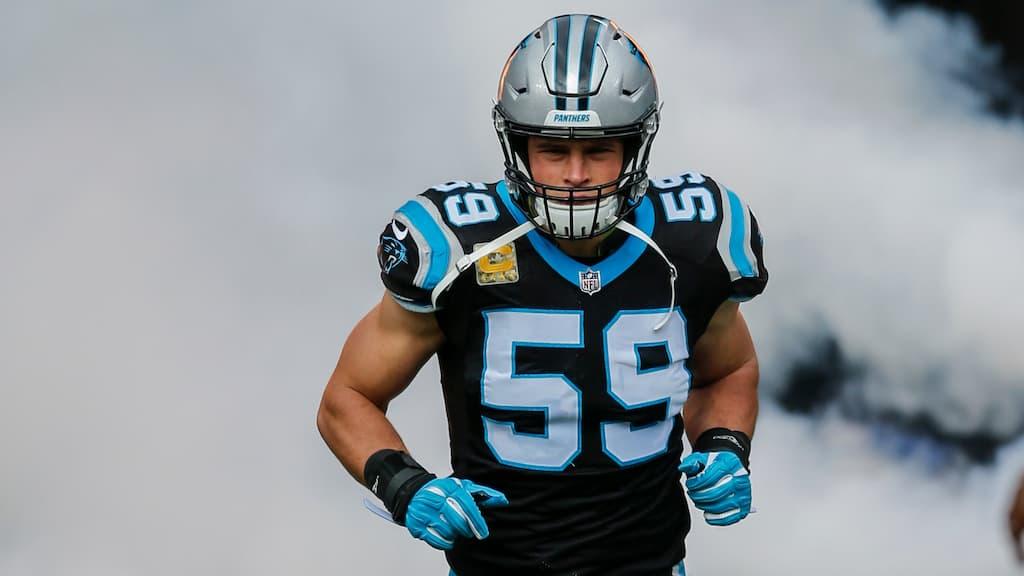
Founded in 1995, the Carolina Panthers are one of the youngest franchises in the NFL. But in their relatively short existence, they have achieved some impressive results.
The team quickly established itself as a competitive name in the NFC, and though success has not been consistent, they can lay a claim to making more Super Bowl appearances in their short history than several other NFL franchise.
Panthers fans, often called the "Prowl," are known for their energy and loyalty. They pack Bank of America Stadium in Charlotte, North Carolina, through all results and weather conditions. The team's identity emphasizes aggressive defense, versatile offense, and a strong commitment to player development.
Where Do the Carolina Panthers Play?
The Panthers play at Bank of America Stadium, located in uptown Charlotte. Opened in 1996, the stadium has a seating capacity of just over 75,000 and offers modern amenities and fan-focused design.
The venue provides an electric atmosphere for football games and hosts concerts, college football games, and more. Its location in Charlotte makes it a central hub for professional sports in the region, creating a home-field advantage that has frequently helped the Panthers win big games.
History of the Carolina Panthers
The Panthers joined the NFL in 1995 as an expansion team, alongside the Jacksonville Jaguars. The franchise quickly found its footing under head coach Dom Capers, spearheaded by standout defensive play. In just its second season, Carolina reached the NFC Championship Game, losing to the Green Bay Packers. In doing so, they matched the Jacksonville Jaguars, who reached the AFC Championship Game that season after also debuting in 1995.
By the late 1990s, under coach George Seifert and then head coach John Fox, the Panthers began making their mark. In 2003, Carolina reached Super Bowl XXXVIII, led by quarterback Jake Delhomme and running back Stephen Davis. The team narrowly lost to the New England Patriots in a dramatic contest, but the run firmly put the Panthers on the map.
The franchise returned to the Super Bowl in 2015 under head coach Ron Rivera and quarterback Cam Newton. This season highlighted the Panthers' explosive offense and balanced defensive play. Although Carolina fell short in Super Bowl 50 against Peyton Manning and the Denver Broncos, the team gained national recognition for its innovative offensive schemes and the dynamic talents of Newton, who took home NFL MVP honors that season.
In recent years, the Panthers have focused on rebuilding through the draft, coaching changes, and the development of young talent, aiming to outduel the Tampa Bay Buccaneers, Atlanta Falcons, and New Orleans Saints in the NFC South and return to playoff contention.
Interesting Facts & Franchise Milestones for the Carolina Panthers
- Reached two Super Bowls: 2003 and 2015.
- Cam Newton won NFL MVP in 2015.
- Bank of America Stadium opened in 1996.
- Known for a passionate fanbase called the "Prowl."
- Historically strong drafting has produced multiple Pro Bowl players.
Notable Carolina Panthers Players and Coaches
Notable Players
Kevin Greene (1996, 1998-99)
Greene, one of the best pass rushers in NFL history, joined the Panthers after already establishing his Hall of Fame credentials with the Los Angeles Rams and Pittsburgh Steelers. In his run with Carolina, which was interrupted by a single season with the San Francisco 49ers in 1997, he recorded 41.5 sacks in three seasons, including a league-leading 14.5 in 1996 to help the Panthers have a stellar second season.
Steve Smith Sr., Wide Receiver (2001-2013)
Smith was a fan favorite known for toughness, precise route running, explosive playmaking, and brash trash talk.
Smith, who finished his NFL career with the Baltimore Ravens, retired in 2017 still far and away the Panthers' all-time leader in receptions (836), receiving yards (12,197), and touchdown catches (67).
Cam Newton, Quarterback (2011-2019)
Newton combined a strong arm, rushing ability, and leadership to guide the Panthers to Super Bowl 50, being named 2015 NFL MVP in the process. His charismatic personality and playmaking ability defined a generation of Panthers football.
Greg Olsen, Tight End (2011-2019)
Olsen was integral to Carolina's offensive success in the 2010s and put together three consecutive 1,000-yard seasons from 2014 to 2016. In 2015, Olsen had a career-high 1,104 receiving yards in the regular season and a further 231 in the NFL playoffs in the Panthers' run to the Super Bowl.
Luke Kuechly, Linebacker (2012-2019)
Kuechly, was a seven-time Pro Bowler who won NFL Defensive Rookie of the Year honors in 2012 and NFL Defensive Player of the Year honors in 2013. He helped the Panthers achieve success in the 2010s thanks to his exceptional instincts and leadership.
Kuechly's tackling, coverage skills, and football intelligence made him one of the league's premier defensive players prior to his unexpected early retirement after eight outstanding seasons.
Christian McCaffrey (2017-2022)
McCaffrey's numbers with the Panthers were affected by injury-shortened seasons in 2020 and 2021, but he established himself as one of the league's most dynamic talents in his five-plus seasons with Carolina. His best campaign was his 2019 season in which he ran for 1,387 yards and 15 touchdowns and caught 116 passes for 1,005 yards and four more touchdowns.
Notable Coaches
John Fox (2002-2010)
Fox led Carolina to its first Super Bowl appearance and won three NFC South titles, and in his tenure with the Panthers, Fox compiled a 73-71 regular season record. Fox, who later coached the Denver Broncos and Chicago Bears, emphasized a balanced offense and aggressive defense.
Ron Rivera (2011-2019)
Rivera guided the Panthers to three NFC South titles, four playoff appearances, and a Super Bowl 50 appearance. He coached the team from 2011 to 2019, compiling a 76-63-1 record and a winning percentage of .548.
Rivera's disciplined leadership, defensive expertise, and adaptability made him a cornerstone of Carolina football history.