NFL Betting Tips for Player Props: Air Yards, Target Share & Usage

Written by: Justin Carlucci
Published: Fri Aug 21, 2026, 8:00 am ET
Read Time: 9 minutes
nfl
Football season is back, and NFL player props will be booming sooner rather than later. Betting NFL player props is an art, and there is plenty to know before you fire on an over or under. The first step is checking out top online sportsbooks to get the best promotions and prices!
There are different strategies, and bettors assign different weights to different numbers. Some people bet almost entirely on price. I take price into consideration too — I rarely want to lay something ridiculous — but I'm usually looking for context.
Nothing is ever exactly as it seems in the NFL. There is usually a reason production happened, a reason it disappeared or a clue about what could change next. I like using a few advanced metrics to get a better feel for a player's situation: how involved he is, how he is being used and who deserves the blame when something goes sideways.
Let's take a look at five advanced metrics I like to use for NFL prop betting as the 2026 season approaches. If you want to come back to the basics, learn how to bet on the NFL for the 2026 season!
NFL Player Props: Expert Betting Tips and Advanced Metrics Explained
Let's start with target share. Target share is essentially the percentage of a team's pass attempts directed toward one player. Targets are an easy counting stat and widely available, but target share gives you the larger picture of how involved a player really was in his offense.
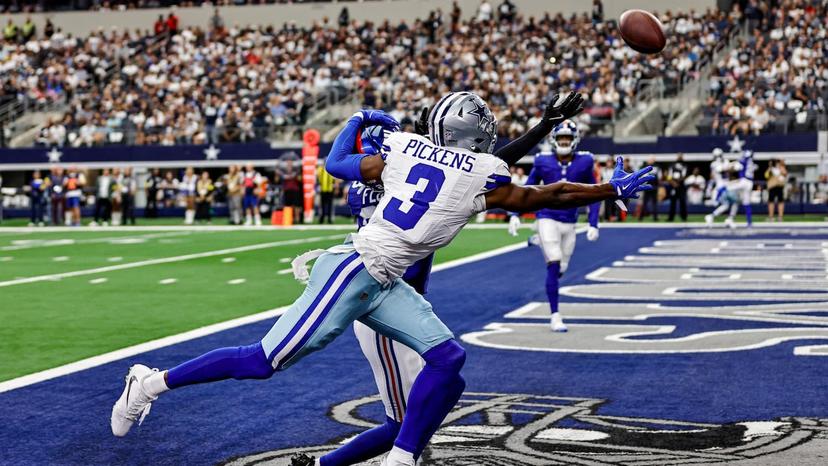
For example, maybe George Pickens sees five targets. That might not sound like much. But if the Dallas Cowboys only throw the ball 15 times in a strange, run-heavy game, Pickens would own a 33% target share. That is a monster number.
In fact, a season-long 33% target share would have led the NFL last season. Only 13 wide receivers and tight ends finished above a 25% target share in 2025. There are plenty of skilled players who receive work in the passing game, but there are not as many true alpha pass catchers as people think.
That is why target share helps put things into perspective. It is some quick math that considers the entire offense rather than only looking at the raw total of targets.
For NFL prop betting, it can help separate a player who had six targets because of a shootout from a player who is actually commanding a major piece of his team's passing game. If you see target share spike over several weeks, there may be an explanation: injuries to other pass catchers, a different game script, a role change or a new offensive approach.
The NFL season is only 18 weeks. That is a very small sample in the grand scheme of things, so determining what is real and what is noise can be difficult. But when you combine target share with context, you can feel more confident that a player's opportunities are sustainable.
Air Yards and Air-Yard Share
Not all targets are created equal. A player can have a massive target share but get most of his looks two yards past the line of scrimmage. Another player could see the same number of targets while operating as the explosive, downfield piece of an offense.
That is why air yards and air-yards share matter.
An air yard measures the distance the ball travels through the air from the line of scrimmage to the intended receiver. Air-yards share measures the percentage of a team's total air yards that belong to one player. It gives us a broader picture of who is being used as the primary downfield threat.
The higher a player's air-yards share, the more likely he is to be the explosive part of his offense. That does not automatically make him a better fantasy asset or prop bet, but it changes the type of player prop you should consider.
Jaxon Smith-Njigba's Historic Season
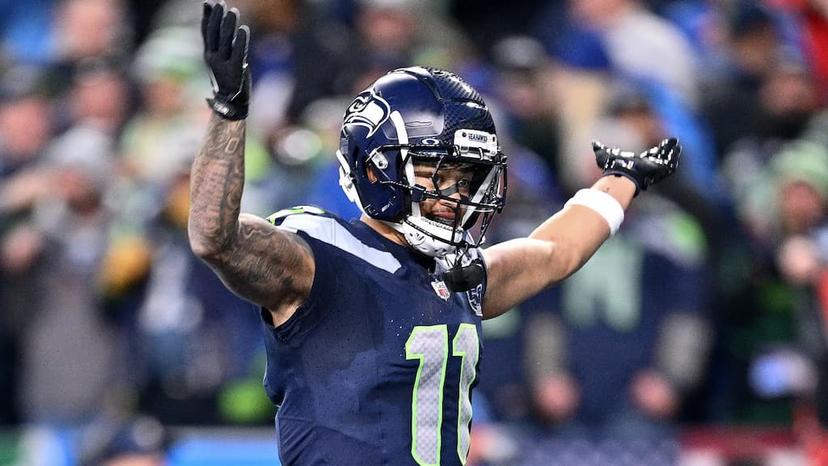
Jaxon Smith-Njigba was an absolute monster in this department last season. He had a 49% air-yards share, which was 5% higher than Tetairoa McMillan in second place. That is a huge gap.
The difference between Smith-Njigba, who led the NFL among players with at least 10 games, and McMillan in second was wider than the difference between McMillan and Justin Jefferson, who ranked ninth. That tells you how ridiculously concentrated the Seattle offense was around Smith-Njigba in the Klint Kubiak system.
I am not trying to do a full deep dive into what life after Kubiak means for Smith-Njigba. The point is simply to show how dominant his role was in 2025. A player handling that kind of air-yards share has enormous upside if his quarterback can deliver the football efficiently.
Now compare that to Wan'Dale Robinson, who had a 28% air-yards share and ranked 34th among players with at least 10 games. Robinson had a career year and earned a nice payday from the Tennessee Titans, but he was a completely different type of player on the field.
He was a volume pass catcher, targeted closer to the line of scrimmage with a lower downfield role. That does not mean he cannot be useful. Robinson can accumulate yards after the catch and rack up receptions. But it can affect how you look at his props.
Depending on the number, you might prefer a Robinson receptions prop over his receiving-yards prop. A player with a high target share but lower air-yards share can offer a strong reception floor, while a player with a big air-yards share and lower target share may be boom or bust but need only a few catches to clear a receiving-yards line.
The dream is finding a player with both a high target share and high air-yards share. That is elite opportunity. Smith-Njigba had both last year, which is why his fantasy and player-prop ceiling was so massive.
More NFL News
Rushing Yards Before and After Contact
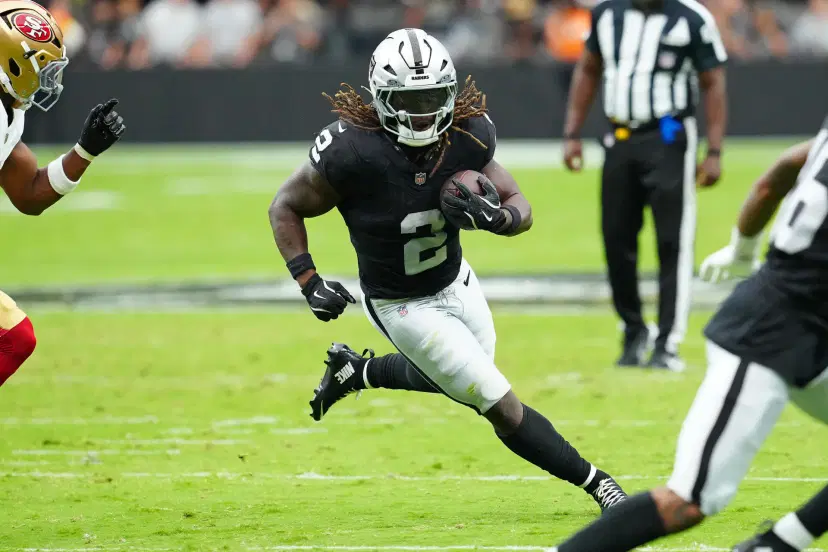
You can open a box score and see that a running back rushed 18 times for 56 yards. What you cannot see from that line is whether he was terrible, whether his offensive line sold him out, or whether he spent the entire game creating yards after getting hit behind the line of scrimmage.
That is where rushing yards before and after contact come in.
Yards before contact measure how much room a ball carrier has before a defender gets a hand on him. It can be viewed from an individual ball-carrier perspective or as a broader team metric. It tells you a lot about run blocking, offensive line play, and whether a player has any room to operate.
Could Ashton Jeanty Break Out in 2026?
Yards after contact per attempt shows how much a running back creates once that first defender arrives. This is where you see strength, balance, tackle-breaking ability, and the kind of player who can turn a dead play into a six-yard gain. Ashton Jeanty is a great example from last year. The Raiders' offensive line hung him out to dry. He was getting hit behind the line at an outrageous rate, and it was difficult for him to build momentum.
Jeanty ranked 62nd out of 65 qualified ball carriers with at least 50 attempts in yards before contact per attempt. That is brutal. It does not mean Jeanty was not elusive or talented. It means his offensive line gave him virtually no chance.
He still ranked in the top third of the league in yards after contact per attempt, which is encouraging. It shows he could run through tackles and create when the situation was working against him.
The names near the top of yards after contact per attempt last year included Javonte Williams, Cam Skattebo, De'Von Achane, and Bijan Robinson. That is a pretty good list of runners who can make defenders miss, run through arm tackles, and create for themselves.
Missed Tackles Forced
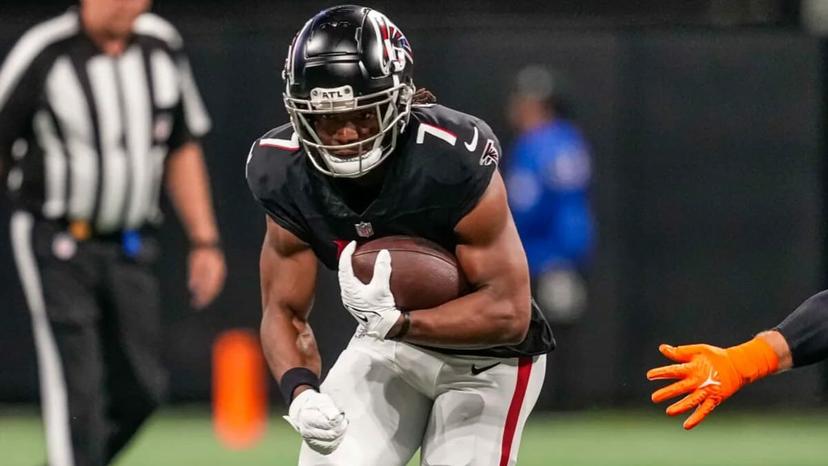
You can also piggyback off those contract metrics with missed tackles forced per attempt. Jeanty ranked inside the top 20 of the 65 qualified ball carriers in that category. Kenneth Walker led the league, while Bijan Robinson and Jahmyr Gibbs were also inside the top five.
Those are encouraging indicators for Jeanty. He did not get much help, but he still showed an ability to run through contact and force missed tackles. The Raiders spent real money on the offensive line this offseason, and Kubiak should put his own fingerprint on the offense.
I do not know how much the Raiders can fix in one offseason. I am not enthralled with the quarterback play or what they have done at wide receiver. But the industry is hopeful that the situation around Jeanty will be better.
I will be very interested to see where his Week 1 rushing prop opens. If the number is similar to some of his 2025 historical lines, it may be worth looking at the over. The hope is that improved blocking, a new offensive system, and Jeanty's already-proven ability after contact all work together.
Using Metrics for NFL Props
Target share tells you how much of the offense belongs to a pass catcher. Air yards tell you whether that player is being used as a downfield weapon or a short-area volume option. Yards before and after contact help you determine whether a running back is benefiting from his environment or creating production despite it.
None of these metrics guarantees a winning prop bet. Price still matters. Matchups still matter. Injuries, weather, game script, and offensive line changes all matter. But these stats can help you move beyond the box score. The goal is not just to see what happened last week. It is to understand why it happened and whether the conditions are still there for it to happen again.
For more NFL betting content, check out the latest NFL odds and NFL picks.
Check Out All of Our Betting Resources at Betting News

Carlucci spent nearly a decade as a reporter, editor, and on-air talent in the Poconos. His transition into the fantasy sports and sports betting industries began in 2016 with roles at Daily Fantasy Insider and Daily Roto Sharks, which led to positions at Better Collective (RotoGrinders). During this period, his work gained national recognition through regular contributions to the New York Post and featured appearances on SiriusXM Fantasy Sports Radio. Carlucci has also contributed to Fantasy Alarm and most recently served as Managing Editor at Third Planet Media (Props.com), where he led content strategy, editorial direction, and served as the forward-facing voice of the brand through live streams and podcasts. You can also find his work at Matthew Berry's Fantasy Life and Hard Rock Digital. He's for some reason a die-hard Titans and 76ers fan and has developed trust issues from "trusting the process." Follow him on X @ThejCarlucci!
This site contains commercial content. We may be compensated for the links provided on this page. The content on this page is for informational purposes only. Betting News makes no representation or warranty as to the accuracy of the information given or the outcome of any game or event.